
PROCESS JOURNAL 003: Nothing against silver
I grew up in a family of women. That means a lot of things, but mostly, it means jewelry.
I grew up in a silver family. My mom didn’t really wear much jewelry when I was a kid, as I recall, but I remember some simple silver pendants and bands on her fingers from time to time.
My aunt. Now, she had the rings. And rings and rings of silver. She had what seemed like so many, and the way she stacked them is still an art. I should tell her that.
It must have been high school when I was either "borrowing" from my other aunt’s stash (one of the beauties of being raised by young people; your aunts are your sisters too) or finally buying my own. There was a good span of time when nearly every finger rarely saw the light of day.
Now there are a lot of my grandmother’s pieces that we all love, but there was something about the bracelets that had us all in a tizzy: three silver cuffs made by a Diné artist. Each one is different, yet they call to be worn together. I wonder if she chose them that way. I think she did; she is a skillful curator. I should tell her that.
Me, my mother, my sister, my two aunts—we coveted them. Each unique, braided, beautiful soft silverwork you can squeeze to fit your wrist. These were the times, when alone with her, we would compliment, maybe even flat out say,
I want those when you’re dead.
Maybe it was the right time, the right day, the fact that I lived thousands of miles away, but one day, visiting my grandma from Portugal, I was going through her jewelry dishes and boxes as usual. The bracelets were out. I couldn’t believe she wasn’t wearing them. She typically had them on. I slipped one over my wrist and then another.
Oh, you can have those. They leave these marks on my old lady skin, take them.
This is my grandmother, no big to-do, nonetheless, a special moment.
I now wear them in the same stack that she did; the thicker braided one on one wrist and the two thinner complementary ones on the other. I wore them every day of my trip. One night out with my aunt and sister, I reached for my drink, and my aunt’s eyes widened from across the table.
You got the fucking bracelets!
In that What-the-fuck-fuck-you-but-good-for-you kind of way that sisters do.
I still wear them nearly every day. Some days alone, some days paired with my own work. They don’t look the same next to my simple aluminum cuff. The silver is darker. It’s beautifully tarnished black in the spots where the metal is braided together, darkening more quickly from the touch. Sometimes I look at them beside the lightweight, cool aluminum against the unmistakable shine and depth of silver, and for a moment I fall into the trap of value that’s been set for us.
I value silver. I value it on a spiritual level. A generational and earthly level. I’m not trying to replace it. Not in the slightest. I’m not trying to sell you something in lieu of silver at a lower price. The thing is that the craft is beautiful. And I am curious about using repurposed metals in a process meant for the freshly mined and approved few.
We view silver as pure. Though it is, in order to be used for jewelry and its many other uses, mixed with copper and zinc to create what we wear, sterling silver. Silver in its pure form is extracted from multiple ores (fancy word for rock). And the same goes for many metals.
Aluminum is seen as a cheap metal, and in the market sense, it is, but if we look back, we can see that just like any other metal, it’s undergone intense pressure from governments and colonial powers in different ways than silver and gold, but nonetheless with the same result.
But those bracelets I wear. The silver came from somewhere too. And so did the aluminum I work with now.
Aluminum is derived from the ore Bauxite. Its first extractions were in its compound, powder form, some kind of salt, and recorded back to the Egyptians. They called it Alum and it was used in a variety of ways, from medicine to art. The Romans used it in making cement and in the 1800s, it was found that Alum was an oxide of a new metal, Alumina.
For a brief period of this century, it was known as The Metal of Kings. More valuable than gold. It was used as a detail on monuments and jewelry, until a few decades later, a process to extract Alumina from Bauxite took away its shine.
In Europe and the US from the 1930s to 50s, aluminum was sold to the housewife. To men, it was modernity, the future. Think George Jetson. You keep up with the Joneses, and suddenly it's everywhere. Then it loses its value. All while communities near mines and refineries are decimated and displaced, we in the West do what we do best: look the other way.
Replace aluminum with any other metal, and the story is the same. That is why I am a proponent of no more mining, only recycled metals. We have enough resources.
In the same way aluminum was cheapened, silver and gold have been artificially inflated in value. Gold and silver objects, artifacts of history, spirituality and culture, have been stolen from Indigenous peoples throughout history and melted into currency.
Culture, ancestrality, melted into money.
At the start of this calendar year, I started seeing something pretty unsettling in the jewelry industry amongst my subset of individual jewelers, trying to explain why the prices of their work were going up and that the customer should continue or begin to purchase their handmade, crafted jewelry.
The reason: because it’s a good investment.
The message I received was: gold and silver are safe at the end of the world. It will be currency again one day.
On a quick scroll through Instagram or TikTok, I can see how this makes sense.
Oh yeah, I could sell this gold or silver ring one day.
But when you stop and think about it, it’s very sad. It’s sad that artists have to explain the price of something they create, and it’s sad that some artists don’t value their craft. That some of us feel forced to say to the consumer,
You’re not purchasing my jewelry because of the hard work and dedication that I put into learning this craft, to creating this ring, this object, what have you. You are purely now purchasing it because of the money attached to it, the price of the metal in the stock market.
When your grandmother hands you down the jewelry that she has worn for years, purchased from an artist that she believed in, in a metal that she loves, that you love together. Are you thinking about how much you’re going to sell that for when the system finally gets you?
Or are you thinking about how long you’re going to wear it and who you are going to give it to next?
Some people don't have the luxury of keeping their grandmother's bracelets. They sell what they love to survive. That's not the same as treating jewelry like a stock portfolio.
Value is and should be subjective.
And in a time when more and more of us who benefit from our systems are only now beginning to feel the disparities and slowly fight back, my question is, why put so much trust in the value they are selling to us?
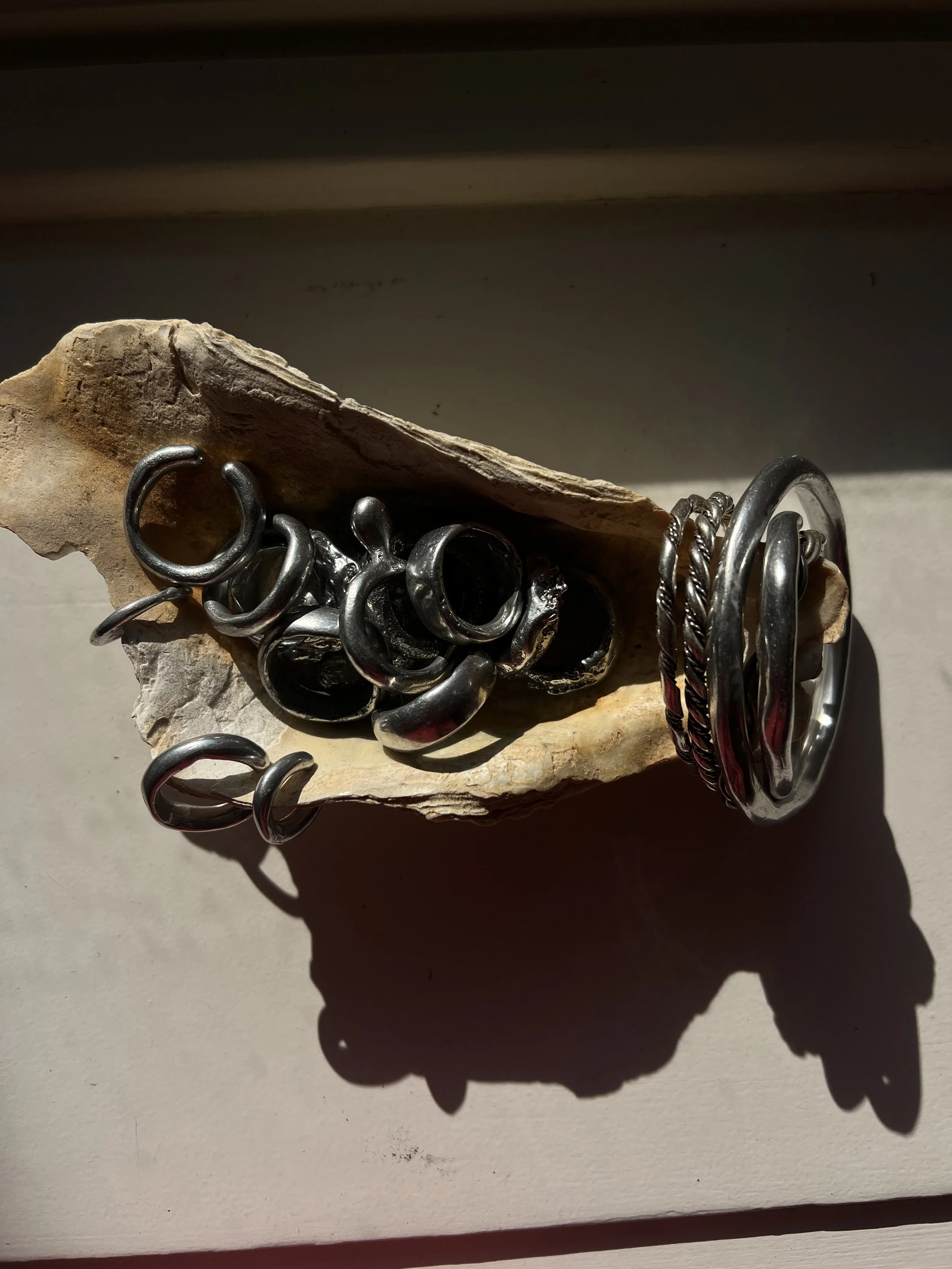
The bracelets, together with my daily stack.
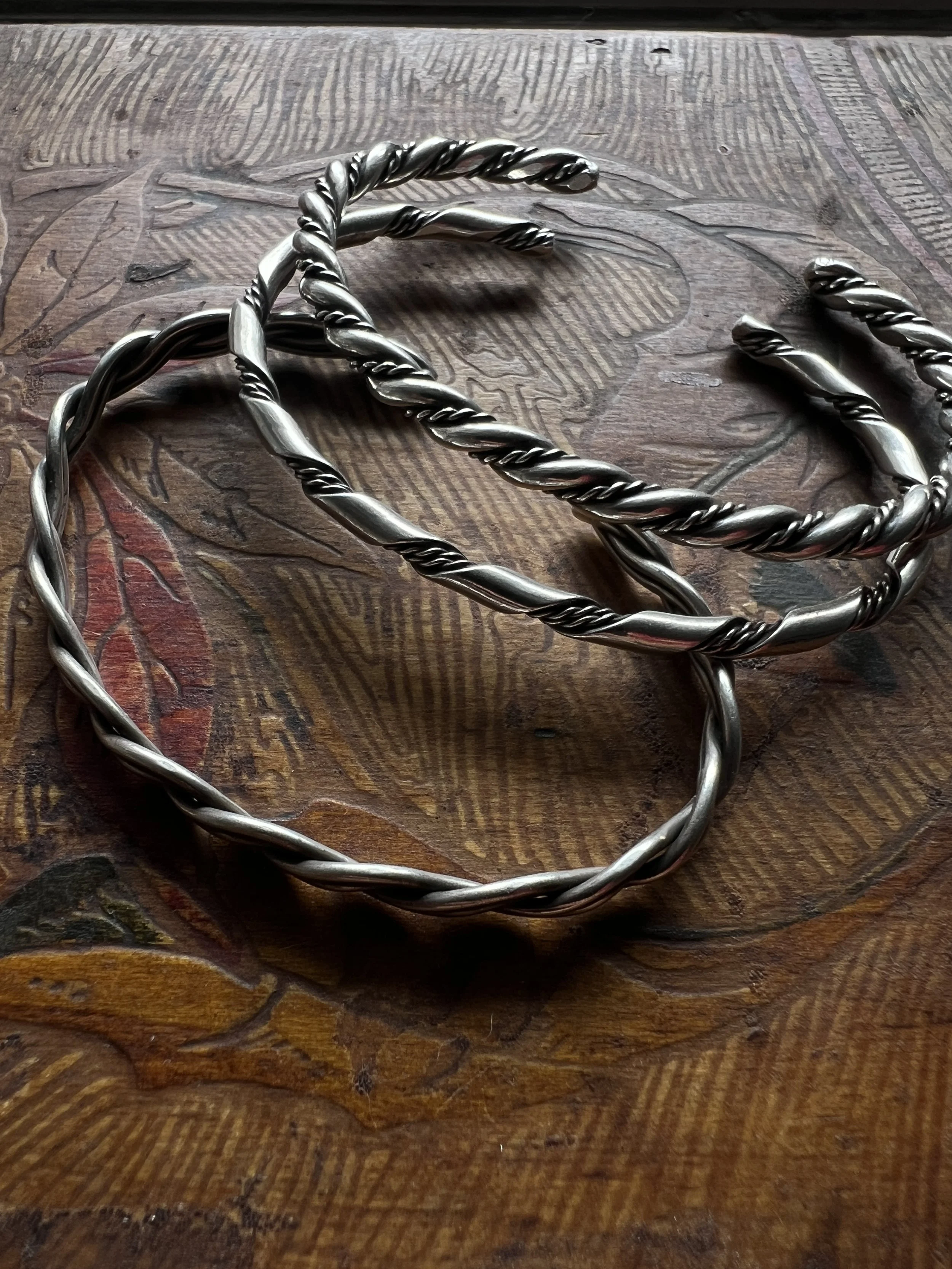
The bracelets, placed on my wooden jewelry box, also from my grandmother
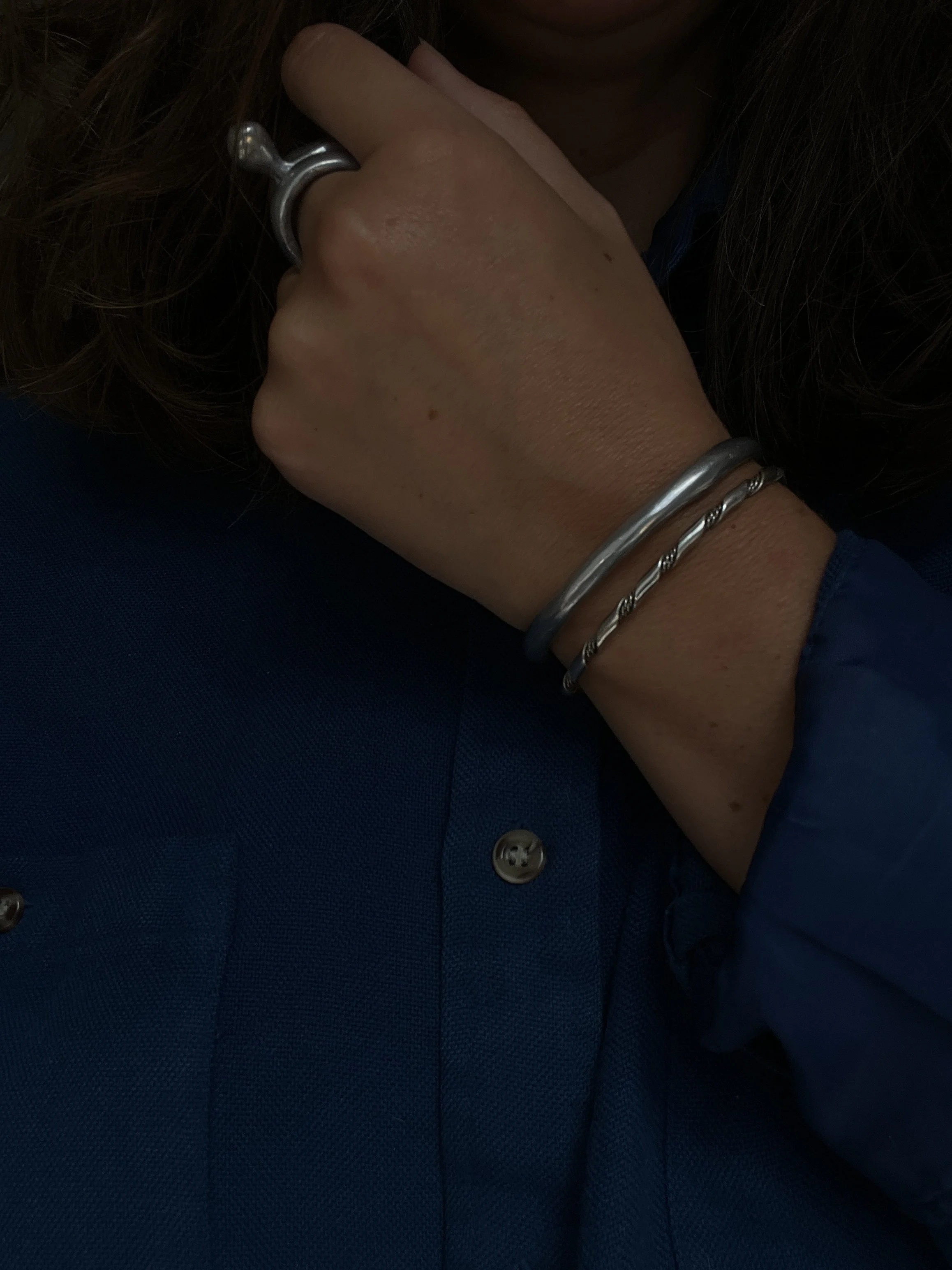
Paired with my Simple Cuff
Sources:
Aluminum Dreams, Mimi Sheller, 2014
https://www.nationalgeographic.com/history/history-magazine/article/inca-empire-gold-spain-pizarro-atahualpa-treasure
https://www.cnbc.com/2025/04/30/time-to-sell-gold-what-to-know-about-trading-jewelry-for-cash.html
https://unitedaluminum.com/a-brief-history-of-aluminum/
https://currentthoughtsontrade.com/central-bank-gold-purchases/